Ever wondered why a quarter of software bugs linger for months, even critical ones? It’s often not about the code itself, but a breakdown in communication and process. I’ve seen countless times how:
Bugs aren’t clearly explained to the team.
Communication about urgency falls flat.
They’re misprioritized against other tasks.
The right people don’t even see the report.
This isn’t just about fixing code.
it’s about understanding how we talk about problems.
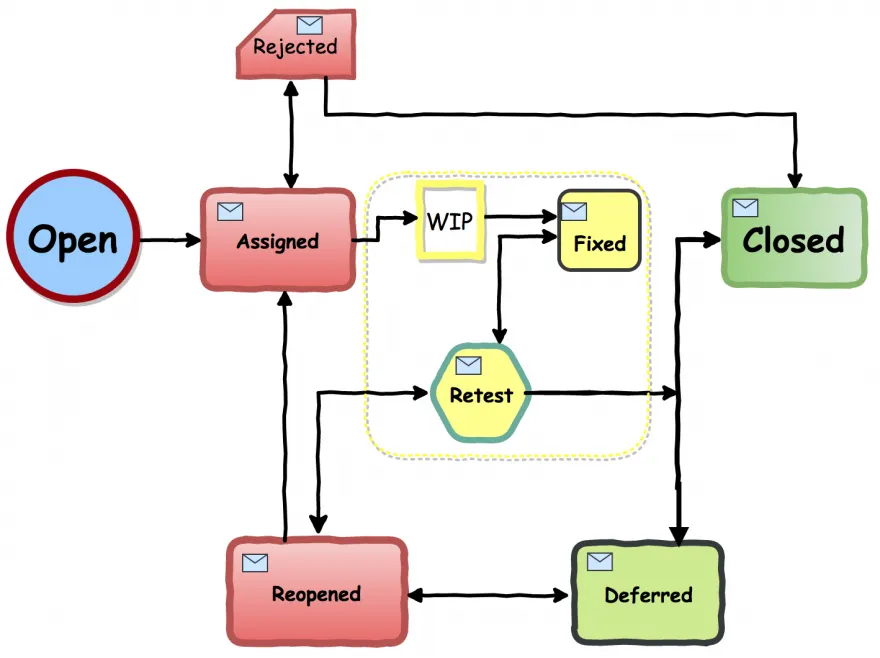
New or Open > A bug is identified and logged in the defect tracking tool by Testers / Users/PO/Manager/Dev/End Customer…
Assigned > Defects should be assigned to the development team or Business Owner Ex: Our testing scope added multiple interfaces then it’s a challenge to get the root cause on time, So set up the defect-triage meeting and assign those defects to the respective team by Test lead, Scrum Master, Product/business owner or Development Manager. Some scenario defects are assigned to the Product Owner or BA if you need clarification.
Work in Progress > We(QA) get the fix from the development team/PO/ Development/ Progress / Automation Engg — The defect is being actively fixed.
Retest > Fixed defect should be deployed to test environment [QA, UAT, Preprod, PRODUCTION ], defect state should be moved to retest state, which means the tester should be ready to start the testing, and the fix was deployed on the test environment. Mostly done by the development lead/release manager or the deployment team/Lead.
Rejected > Defect can be rejected due to various reasons, such as an invalid defect, assigned to a different team, Data error, and Duplicate defect. Those defects should be rejected by the Test lead, Scrum Master, Product Owner, or Development Lead/Manager.
Reopened > We[QA] team has to retest the defect on time, if it fails, the defect should be reopened or reraised. Mostly done by a tester,/Test Lead/Automation Tester. if unable to retest the defect, as the testing team justifies.
Deferred > Defect can be moved to the deferred state, due to various reasons might be as feature tickets, other dependencies, and out-of-scope.
Closed > The defect is retested and confirmed fixed and closed.
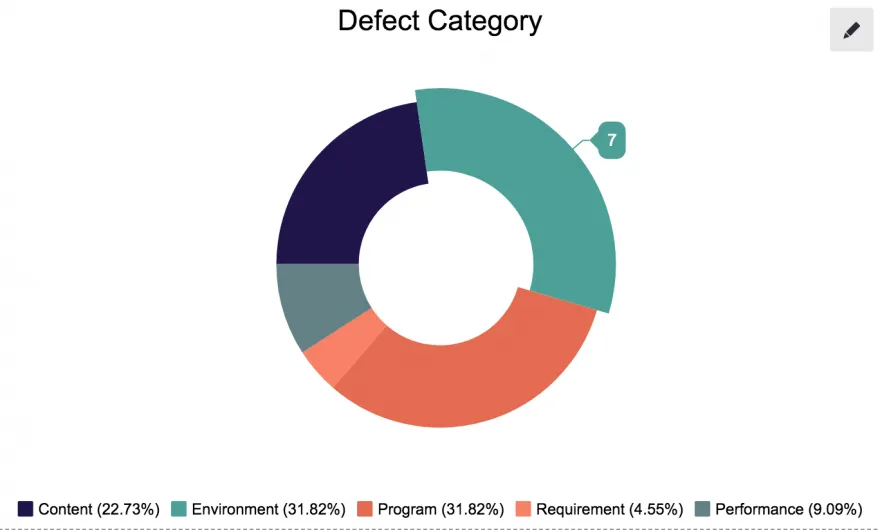
Defect Leakages are measured from different phases
– Requirement
– Design
– Unit Testing
– System Testing
– Integration Testing
– System Integration Testing.
– End-to-End Testing.
– User Acceptance Testing
– Beta Phase.
– Production.
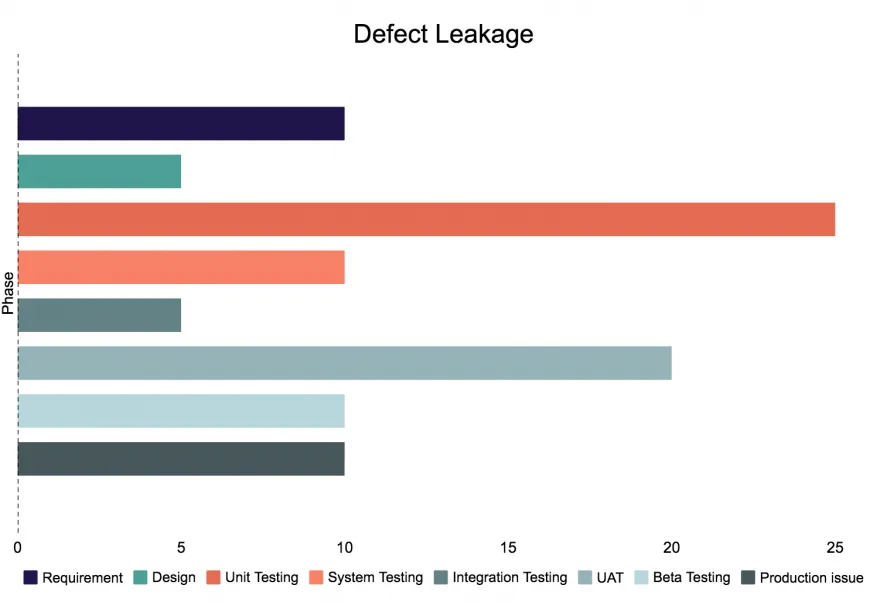
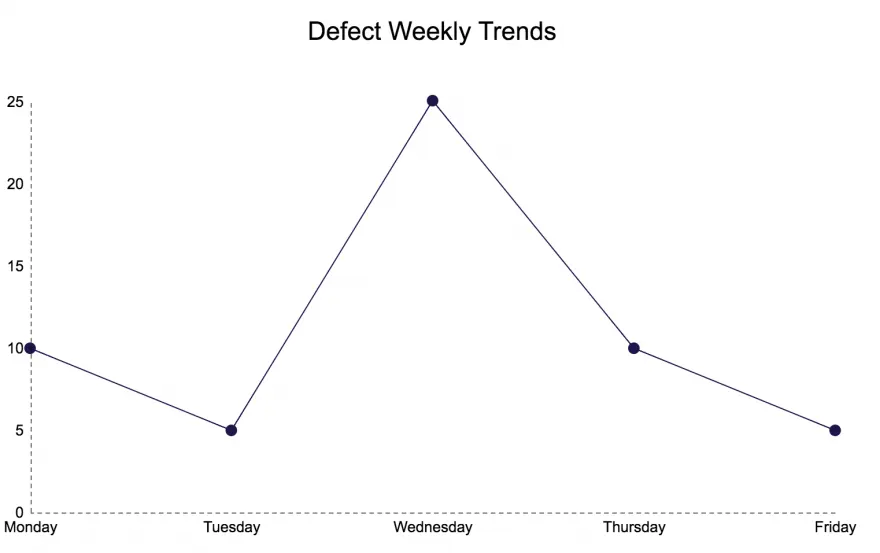
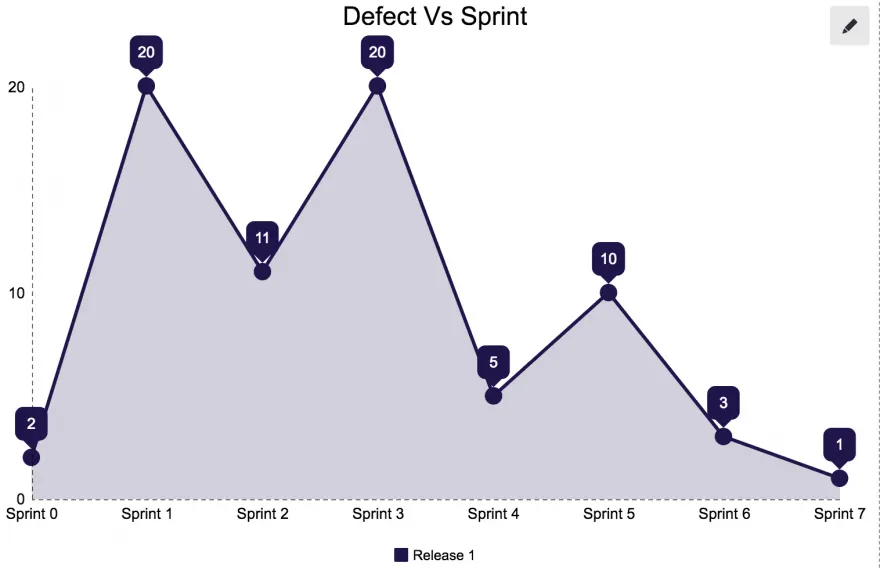
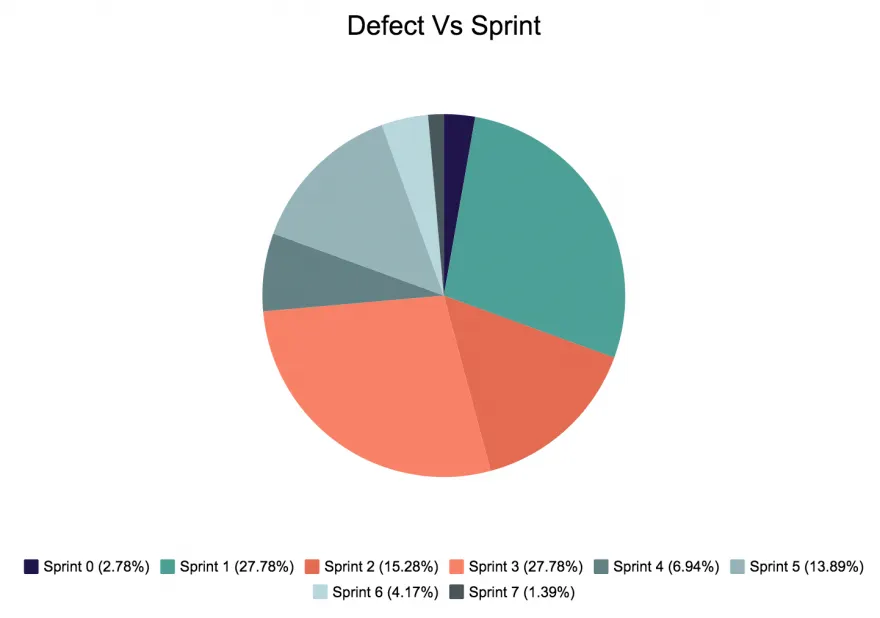
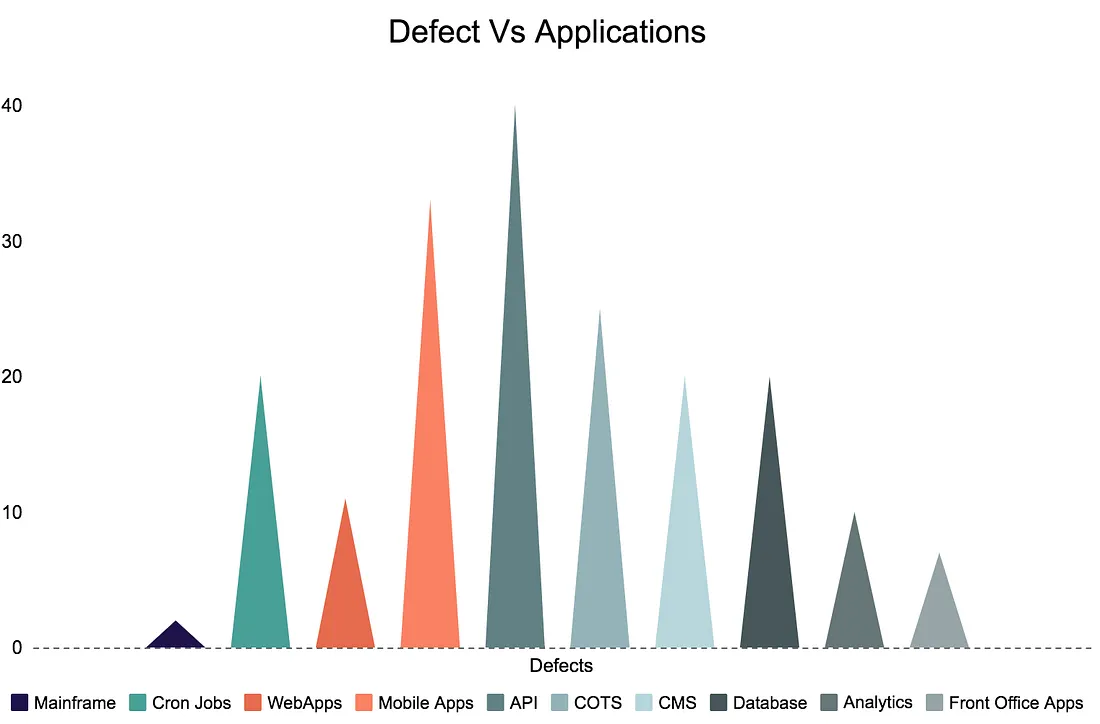
=> Defects in Counts
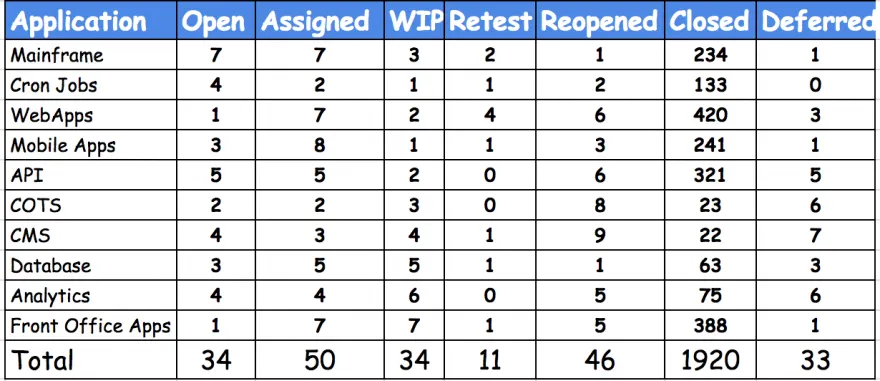
=> Applications vs Defect Priority Report
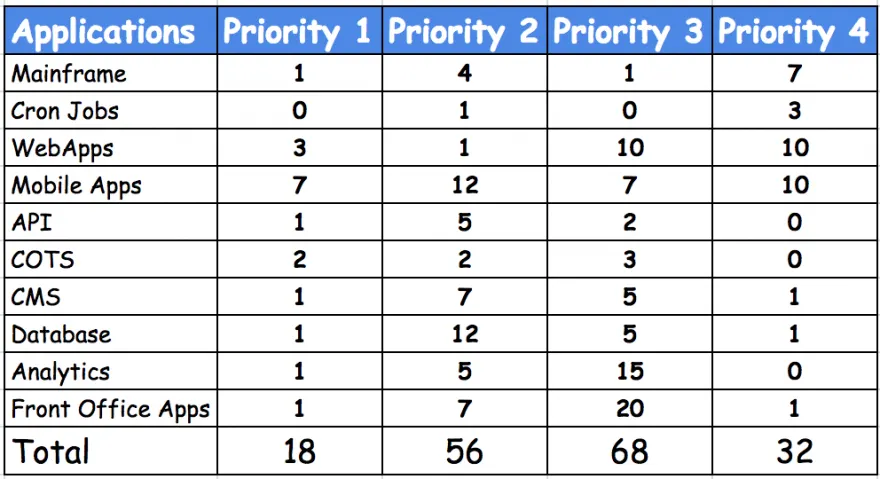
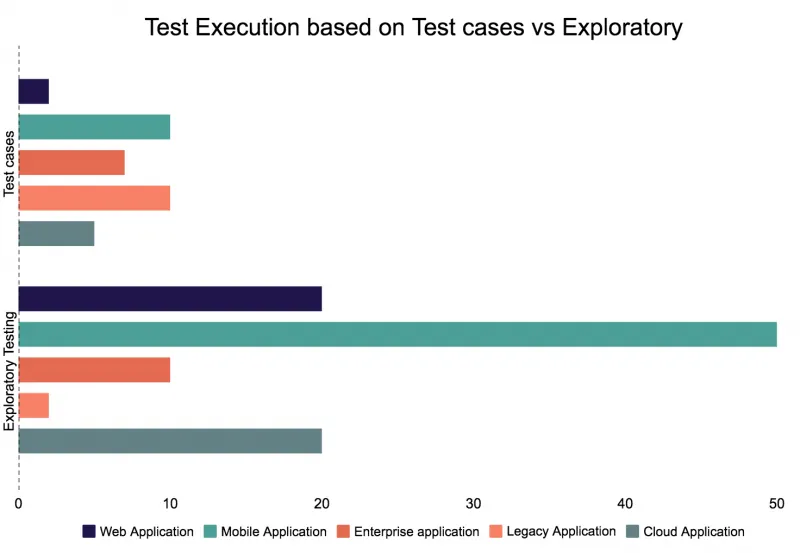
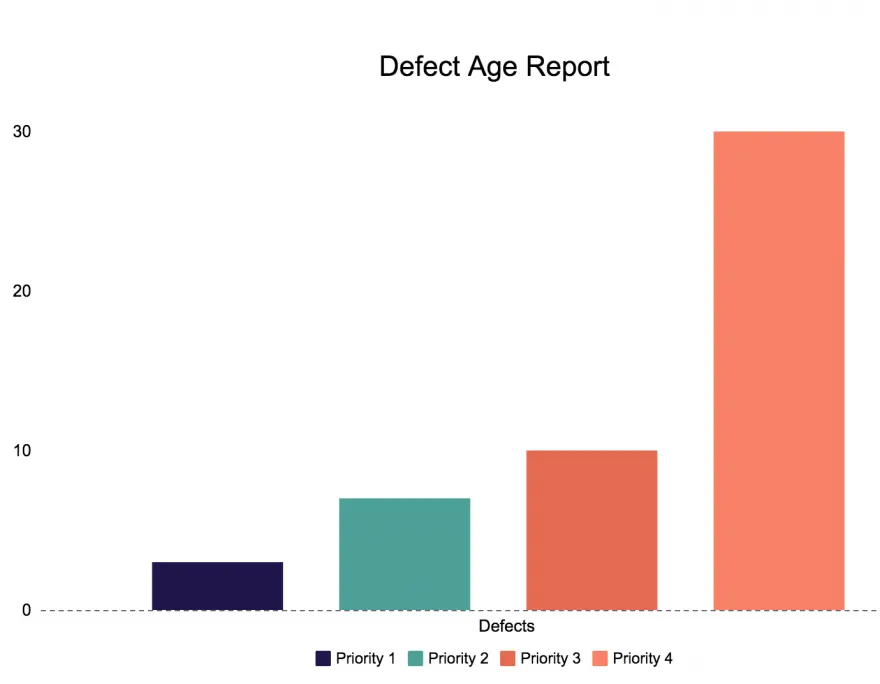
For defects, the report should be mapped to the root cause and it’s mandatory; this helps to reduce defects and improve quality and prevention.
Accessibility issue > All external user’s applications should meet the section508 compliance. It’s a subset of usability issues if a physically challenged person is not able to use the application, which we[qa] marked as an accessibility issue.
Authentication error > It’s maybe various reasons such as login issues, environmental problems [ Server issue, Database connections issue], the token expired/not assigned, Data issues, User id is an inactive state, password problems, network issues, VPN connectivity problems and more…
Application[System] error > Such as application down, not pointing to the right environment, functional failures…
Business error > Business requirement is not clear, expected information is missing in the BRD [Business requirement document].
Browser issue: Cross-browser testing, the specific browser does not support.
ex: Website working only on Chrome, not mush responsive
Content issue > Image is not clear, Audio is not playing, Video is not clear/not playing, content color is not visible, font type is not clear, the format is mismatched, file size problem, content is not downloading, and more…
Data issue > Could be a test data issue, Data migration issue, data setup issue, Invalid data, and more.
Database issue > Not pointing to expected DB, Services was down, data table issue, data is not stored, data migration issue, and more…
Duplicate bug > Most of the time created by the testing team. :), It should review by the QA team and should be closed.
Design bug > Screen Display location, User information message, repeated screen design, some scenario tester’s clarification has been mapped to the design bug.
Devices Specific error: Mostly digital arena, Ex: iPhone-X does not support forms.
Environment issue > Could be various reasons, more information click this Link Environment issue
Functional issue > The expected functionality is not working,
ex: Button does not respond
when clicking on the button, getting an error.
Interface error > Interface system does not support expected the response code, API service was down, Interface service issue.
Ex :
502 Bad Gateway
503 Service Unavailable
504 Gateway Timeout
Installation issue > Application does not install properly
[Ex: App does not install properly, App crashed after the installations etc…]
Network error > Connectivity issue, host file error.
Ex :
511 Network Authentication Required
599 Network Connect Timeout Error
Program error > This bug leaked from unit testing, for example: when we submit the form getting an error[ could be Syntax errors, Logical errors, Runtime errors, etc…]
Performance issue > 25% of performance issues observed during the life. Example page loading issues, slow response, the image is not loading, concurrent login issues, etc.
Ex: Click this link :
Requirement error > 30% of bugs have been identified in the requirement area, the reason behind, less documentation, requirements are very high level, and the tester does not participate in the early phase. Most of the tester clarification mapped to requirement error/gap.
Report error > This bug has always been a low priority, unless if the specific requirement has been raised by the business. I’d raised the defect on the TAT report [ Siebel on Demand], Turn around time is mismatched when choosing the different registration/time zone.
OS Specific > Most of the latest Operating systems should be supported to applications, if not that would be OS specific error or Compatibility issue.
Box functionality > few features do not support interface systems or third-party applications, which means OOB functionality for our testing scope.
Security bug > Security bug is more critical than one
Ex: Authentication, Security misconfiguration, sensitive data exposure, Unvalidated redirects, cross-site script, etc.
Tester error > In the Test execution phases, few defects are created, however, those defect(s) are not valid bugs, such as test data setup issues, test cases understanding challenges, and execution errors.
Usability issue > Application is hard to use by users, pagination, and user forms are added additionally, an additional pop-up message for user error information, error handling issue,s and more.
Clarifications > For understanding purpose tester can create a defect, this may move to feature defects or Internal Audit purposes.
UTR[Unable to Reproducible] > During Test execution, a few defects are unable to be reproducible every time. such as network-related issues, content download issues, App crashes, etc.
.